
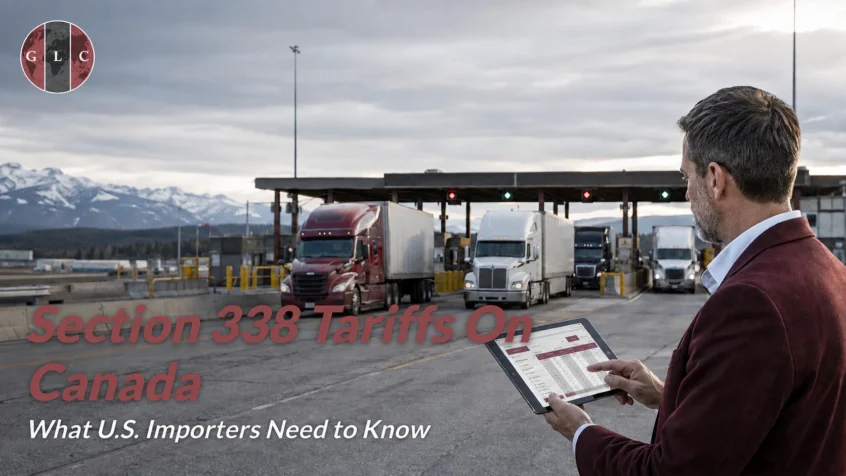
The U.S. – Canada tariff environment changed again in August 2026. After the Trump administration announced additional 50% ad valorem duties on certain Canadian goods under Section 338 of the Tariff Act of 1930, a presidential proclamation temporarily delayed the effective date by three days, from August 19 to August 22, 2026. The Federal Register notice published August 24 confirms the revised effective date of … Read More
Brazil Section 301 Tariffs: 25% Duty Starts July 22
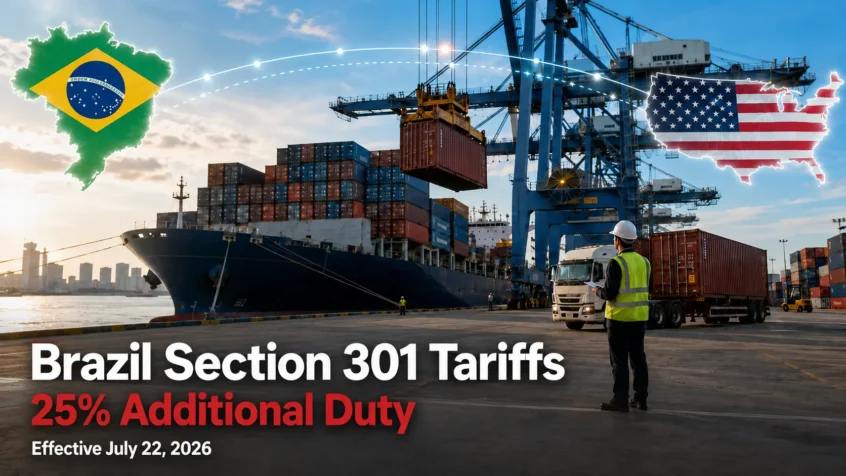
The Office of the United States Trade Representative has finalized a new Section 301 trade action affecting imports from Brazil. Beginning at 12:01 a.m. Eastern Time on July 22, 2026, covered products of Brazil entered for consumption, or withdrawn from a warehouse for consumption, will be subject to an additional 25% ad valorem duty. For U.S. importers, the immediate question is not simply whether a … Read More
USMCA 2026 Review: What North American Importers Need to Plan For Now
The USMCA 2026 review is no longer a distant policy milestone. It is now one of the most important trade developments for companies moving goods across the United States, Mexico, and Canada. For importers, exporters, manufacturers, and supply chain teams, the review introduces a new planning environment where compliance, documentation, origin strategy, and cross-border logistics must be evaluated together. On July 1, 2026, the United … Read More
New Customs Enforcement Order: What Importers Should Review Now
Customs enforcement is changing. Importers should prepare before the rules become operational. On June 3, 2026, the White House issued an Executive Order titled Strengthening Customs Enforcement. The order directs the Department of Homeland Security and U.S. Customs and Border Protection to pursue a broad customs enforcement reform effort focused on Importers of Record, bond coverage, supply chain disclosures, foreign IORs, audits, penalties, and import … Read More
Transpacific Rates Are Surging: What Importers Need to Review Before Q3
Transpacific ocean freight rates are moving quickly again, and importers that are still planning against Q1 assumptions may need to revisit their Q3 strategy now. The issue is not only the base ocean rate. The current market is being shaped by early peak-season demand, carrier capacity management, blank sailings, fuel-related pressure, and new peak season surcharges. For importers moving goods from Asia into the United … Read More
A $1.2T Trade Deficit, New Tariff Pressure
On December 9, 2025, the U.S. Senate Appropriations Subcommittee reviewed USTR activities and FY2026 funding priorities, with Ambassador Jamieson Greer as the witness. The hearing emphasized the use of reciprocal tariffs as an enforcement tool aimed at addressing a reported $1.2 trillion trade deficit. While the memo is written through an agriculture lens, the themes apply broadly across supply chains: More tariffs used as leverage … Read More
Another Tariff Expansion: Foreign Duties May Prompt U.S. Tariffs
On September 6, 2025, the White House issued an Executive Order modifying the scope of reciprocal tariffs and establishing new procedures for implementing trade and security agreements. For supply chain leaders in industries like e-commerce, automotive, pharmaceuticals, and CPG, this marks another important shift in the trade landscape. Understanding these changes, and how to adjust your logistics strategy, will be critical to minimizing risk and … Read More
Reciprocal Tariffs: Current Details as of July 31

Although the reciprocal tariffs are slated to take effect on Aug. 1, the most up‑to‑date information comes from the July 31 announcement. Annex II of the executive order issued at that time lists each affected country and the percentage of additional duty that will be added to its existing Harmonized Tariff Schedule rate. For every country‑specific entry the order repeats the same conditions: the additional duty does not … Read More
Trump’s 30% Tariff Threat on EU and Mexico
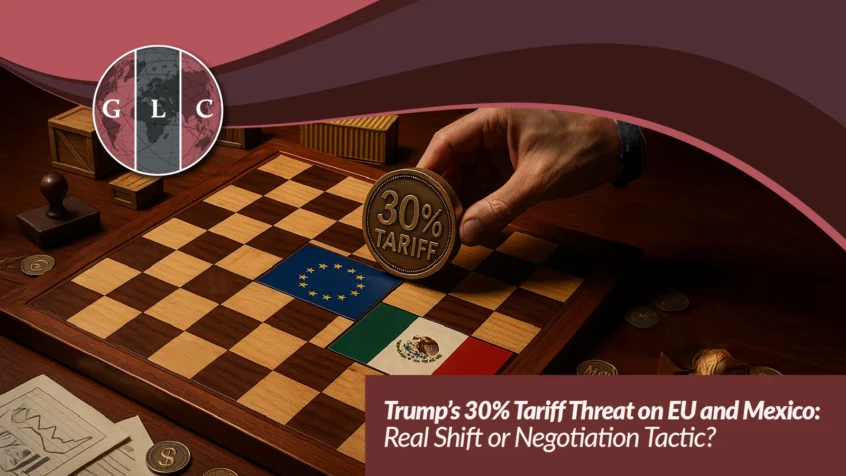
On July 12, 2025, President Donald Trump announced plans to impose 30% tariffs on nearly all imports from the European Union and Mexico, with the measures scheduled to take effect on August 1. The announcement, made via Truth Social, marks one of the most aggressive trade moves in recent history and has triggered global concern, from diplomatic circles to financial markets. What’s Behind the Tariff … Read More
New Round of Country-Specific Tariff Letters Announced

With less than a month until new tariffs take effect, the U.S. has accelerated its rollout of country-specific reciprocal tariff letters, now reaching 22 countries in total. These tariffs are set to be enforced at 12:01 a.m. EDT on August 1, following the expiration of the current extension period. These tariffs fall under the country-specific reciprocal tariff framework, a policy intended to address long-standing trade … Read More