
U.S. import compliance is moving into a more data-driven phase. Two recent U.S. Customs and Border Protection actions, enhanced enforcement of Importer of Record information and a new initiative focused on supply chain visibility, show a common direction: CBP wants more accurate importer identity data and deeper visibility into the parties, documents, and information behind goods entering the United States. Both actions trace back to … Read More
Section 338 Tariffs on Canada: What U.S. Importers Need to Know
The U.S. – Canada tariff environment changed again in August 2026. After the Trump administration announced additional 50% ad valorem duties on certain Canadian goods under Section 338 of the Tariff Act of 1930, a presidential proclamation temporarily delayed the effective date by three days, from August 19 to August 22, 2026. The Federal Register notice published August 24 confirms the revised effective date of … Read More
Brazil Section 301 Tariffs: 25% Duty Starts July 22
The Office of the United States Trade Representative has finalized a new Section 301 trade action affecting imports from Brazil. Beginning at 12:01 a.m. Eastern Time on July 22, 2026, covered products of Brazil entered for consumption, or withdrawn from a warehouse for consumption, will be subject to an additional 25% ad valorem duty. For U.S. importers, the immediate question is not simply whether a … Read More
CPSC eFiling Is Now Mandatory: What Importers Must Know About Electronic Certificates of Compliance
As of July 8, 2026, the U.S. Consumer Product Safety Commission (CPSC) has officially launched its mandatory electronic filing (eFiling) program. If your company imports regulated consumer products into the United States, this change directly impacts how you submit compliance documentation at the border. Understanding the new requirements and preparing your internal processes is no longer optional, it is a condition of clearing customs. At GLC … Read More
CPSC eFiling Becomes Mandatory July 8, 2026: What Importers Need to Prepare Now
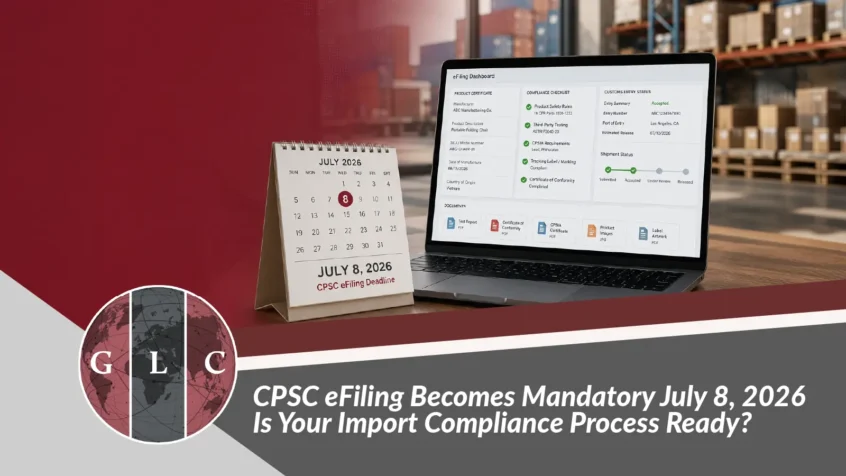
Beginning July 8, 2026, importers of regulated consumer products will face a major change in how product safety certificate information is submitted during the U.S. customs entry process. Under the U.S. Consumer Product Safety Commission’s new eFiling requirements, paper or PDF Certificates of Compliance will no longer be enough on their own for covered imported products. Instead, required certificate data must be submitted electronically as … Read More
Section 301 Forced Labor Tariffs: What U.S. Importers Need to Know

The Office of the United States Trade Representative has announced findings and proposed action in 60 Section 301 investigations related to forced labor goods. For U.S. importers, this is not just another trade-policy headline. It is a signal that sourcing transparency, customs readiness, and landed-cost planning may become even more important in the months ahead. On June 2, 2026, USTR determined that the acts, policies, … Read More
New Customs Enforcement Order: What Importers Should Review Now
Customs enforcement is changing. Importers should prepare before the rules become operational. On June 3, 2026, the White House issued an Executive Order titled Strengthening Customs Enforcement. The order directs the Department of Homeland Security and U.S. Customs and Border Protection to pursue a broad customs enforcement reform effort focused on Importers of Record, bond coverage, supply chain disclosures, foreign IORs, audits, penalties, and import … Read More
Customs Clearance Starts Before Arrival
Customs clearance before arrival is one of the most important steps importers can take to reduce delays, avoid compliance gaps, and improve shipment visibility. For many companies, customs clearance feels like something that happens only when cargo reaches the port, airport, or border. In reality, the strongest customs process starts before the shipment moves. A missing invoice, incorrect classification, late Importer Security Filing, inactive customs … Read More