
- All
- #BrokerageTerms
- Air Freight
- Customs Brokerage
- Customs Q&A
- GLC Colombia News
- GLC Employee News
- Industria Mascotas
- Noticias GLC
- Ocean Freight
- Pet Products & Distribution
- Shipping News
- Supply Chain Trending News
- Transporte de Carga
- Transporte de carga aérea
- Transporte de carga aérea
- Trucking
- Trucos y Consejos de Envío
- Warehousing and Distribution

Ocean Space Too Tight? How to Decide What Moves by Air This Q4
The booking was confirmed. The purchase order is due before Black Friday. Then the container rolls to the next sailing, and the question lands on your desk: do we fly it? For many importers this fall, the honest answer is “some of it.” Ocean schedules are harder to rely on, but air freight isn’t cheap either. The smartest move is rarely to convert an entire … Read More

Global Logistical Connections Upgrades Operating System and Launches New Client Tracking Portal
Dear Valued Client, We’re excited to share that Global Logistical Connections is upgrading our operating system as part of our continued investment in better technology, visibility, and service. While you should not expect any disruption to your shipments or our services, you may notice a few changes over the coming days: New Tracking Portal: We will be launching a new client portal with improved shipment … Read More
CBP Import Compliance: IOR Enforcement and Supply Chain
U.S. import compliance is moving into a more data-driven phase. Two recent U.S. Customs and Border Protection actions, enhanced enforcement of Importer of Record information and a new initiative focused on supply chain visibility, show a common direction: CBP wants more accurate importer identity data and deeper visibility into the parties, documents, and information behind goods entering the United States. Both actions trace back to … Read More

September 2026 Ocean Freight: What Importers Should Review
September begins with a complicated Transpacific ocean freight environment for U.S. importers. Capacity is being actively managed, rate pressure remains elevated, Panama Canal operating conditions are changing, and companies are beginning to position their next wave of Q4 cargo. The important point is that a softer import-demand forecast does not automatically mean easier shipping conditions. GLC’s recent Transpacific ocean freight market update identified 14 blank … Read More
Section 338 Tariffs on Canada: What U.S. Importers Need to Know
The U.S. – Canada tariff environment changed again in August 2026. After the Trump administration announced additional 50% ad valorem duties on certain Canadian goods under Section 338 of the Tariff Act of 1930, a presidential proclamation temporarily delayed the effective date by three days, from August 19 to August 22, 2026. The Federal Register notice published August 24 confirms the revised effective date of … Read More
Transpacific Ocean Freight August 2026: Rates & Blank Sailings
Transpacific ocean freight in August 2026 is entering another period of tighter capacity, increasing rate pressure and greater routing complexity. For U.S. importers moving cargo from Asia, the next several weeks deserve particular attention as blank sailings, General Rate Increases, equipment constraints and Panama Canal conditions converge ahead of September. Current market intelligence provided to Global Logistical Connections indicates that 14 blank sailings are scheduled … Read More
Exporting to Mexico in 2026: T-MEC & Freight Guide
Mexico remains one of the most important markets for North American supply chains. For U.S. and Canadian companies, exporting to Mexico in 2026 is closely tied to regional manufacturing, cross-border trucking, customs compliance, and the evolving T-MEC/USMCA environment. But moving cargo southbound requires more than booking a truck. Exporters need to understand rules of origin, Mexican customs documentation, tariff classification, transportation requirements, and the operational … Read More
PierPASS TMF Increase: What Importers Need to Know
Importers moving containers through Southern California’s San Pedro Bay port complex should update their landed-cost forecasts. Effective August 1, 2026, the PierPASS Traffic Mitigation Fee, or TMF, at the Ports of Los Angeles and Long Beach increased by 4.77%. The new rate is $40.63 per twenty-foot equivalent unit, or TEU, and $81.26 for containers of all other sizes. The increase applies to non-exempt containers handled … Read More
Section 301 Forced Labor Import Duties Effective July 24, 2026
New Section 301 forced labor import duties became effective today, July 24, 2026, creating immediate tariff, classification, and entry-filing considerations for U.S. importers. The action applies to imports from 60 economies and generally imposes an additional duty of 10% or 12.5%, subject to product, country, trade agreement, and in-transit exemptions. U.S. Customs and Border Protection issued CBP’s CSMS guidance on July 23 with filing instructions … Read More
Brazil Section 301 Tariffs: 25% Duty Starts July 22
The Office of the United States Trade Representative has finalized a new Section 301 trade action affecting imports from Brazil. Beginning at 12:01 a.m. Eastern Time on July 22, 2026, covered products of Brazil entered for consumption, or withdrawn from a warehouse for consumption, will be subject to an additional 25% ad valorem duty. For U.S. importers, the immediate question is not simply whether a … Read More

CPSC eFiling Is Now Mandatory: What Importers Must Know About Electronic Certificates of Compliance
As of July 8, 2026, the U.S. Consumer Product Safety Commission (CPSC) has officially launched its mandatory electronic filing (eFiling) program. If your company imports regulated consumer products into the United States, this change directly impacts how you submit compliance documentation at the border. Understanding the new requirements and preparing your internal processes is no longer optional, it is a condition of clearing customs. At GLC … Read More
Ocean Freight Q3 2026: BAF Surcharges Are Rising. Here’s What Importers Should Review Before Booking
Ocean Freight Q3 2026 is entering a more complex pricing and capacity environment. For importers, the challenge is no longer simply finding the lowest base ocean rate. Fuel-related surcharges, early peak-season demand, carrier capacity management, blank sailings, and tighter booking windows are all influencing the true cost and reliability of moving cargo. One of the biggest changes came with the July quarterly fuel surcharge reset. … Read More
USMCA 2026 Review: What North American Importers Need to Plan For Now
The USMCA 2026 review is no longer a distant policy milestone. It is now one of the most important trade developments for companies moving goods across the United States, Mexico, and Canada. For importers, exporters, manufacturers, and supply chain teams, the review introduces a new planning environment where compliance, documentation, origin strategy, and cross-border logistics must be evaluated together. On July 1, 2026, the United … Read More
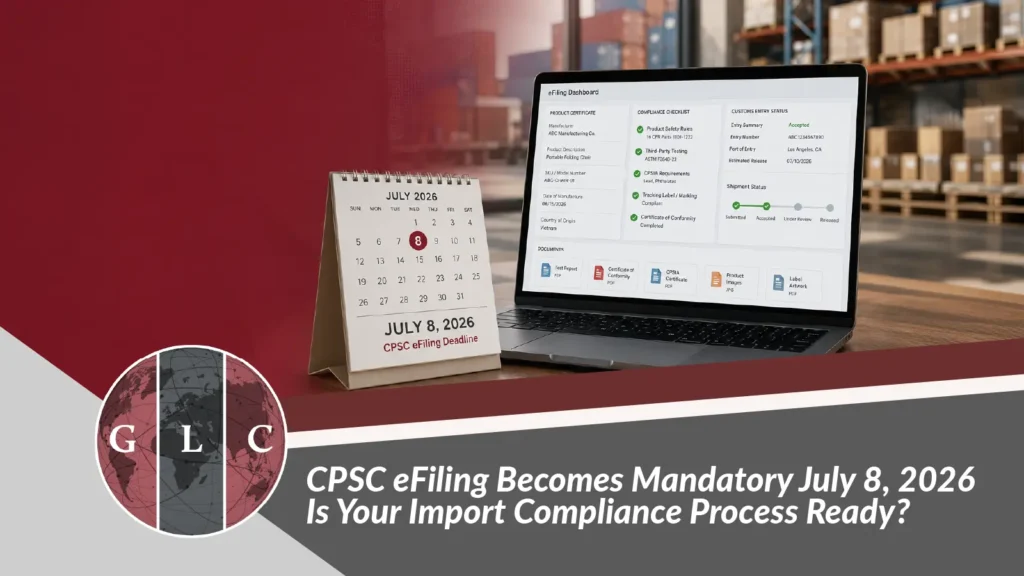
CPSC eFiling Becomes Mandatory July 8, 2026: What Importers Need to Prepare Now
Beginning July 8, 2026, importers of regulated consumer products will face a major change in how product safety certificate information is submitted during the U.S. customs entry process. Under the U.S. Consumer Product Safety Commission’s new eFiling requirements, paper or PDF Certificates of Compliance will no longer be enough on their own for covered imported products. Instead, required certificate data must be submitted electronically as … Read More
Section 301 Forced Labor Tariffs: What U.S. Importers Need to Know
The Office of the United States Trade Representative has announced findings and proposed action in 60 Section 301 investigations related to forced labor goods. For U.S. importers, this is not just another trade-policy headline. It is a signal that sourcing transparency, customs readiness, and landed-cost planning may become even more important in the months ahead. On June 2, 2026, USTR determined that the acts, policies, … Read More
New Customs Enforcement Order: What Importers Should Review Now
Customs enforcement is changing. Importers should prepare before the rules become operational. On June 3, 2026, the White House issued an Executive Order titled Strengthening Customs Enforcement. The order directs the Department of Homeland Security and U.S. Customs and Border Protection to pursue a broad customs enforcement reform effort focused on Importers of Record, bond coverage, supply chain disclosures, foreign IORs, audits, penalties, and import … Read More
Transpacific Rates Are Surging: What Importers Need to Review Before Q3
Transpacific ocean freight rates are moving quickly again, and importers that are still planning against Q1 assumptions may need to revisit their Q3 strategy now. The issue is not only the base ocean rate. The current market is being shaped by early peak-season demand, carrier capacity management, blank sailings, fuel-related pressure, and new peak season surcharges. For importers moving goods from Asia into the United … Read More
Ocean Freight Rates Are Climbing Again: What Shippers Need to Know for June and July 2026
Ocean freight rates have been climbing steadily for the past several weeks, and the pace is accelerating heading into June and July 2026. For importers shipping from China and from South America, the numbers moving through the market right now are not projections. They are active carrier filings, confirmed General Rate Increases, and spot rate data already reflecting a sharp upward move. If your team … Read More

Scaling Pet Supply? Fix Your Logistics First
The U.S. pet supply market keeps growing, and that creates a major opportunity for brands selling pet food, treats, toys, grooming products, accessories, and other pet care items. According to the American Pet Products Association, U.S. pet industry spending reached $158 billion in 2025 and is projected to reach $165 billion in 2026. But growth also creates pressure. More SKUs, more import requirements, more retailers, … Read More

Customs Clearance Starts Before Arrival
Customs clearance before arrival is one of the most important steps importers can take to reduce delays, avoid compliance gaps, and improve shipment visibility. For many companies, customs clearance feels like something that happens only when cargo reaches the port, airport, or border. In reality, the strongest customs process starts before the shipment moves. A missing invoice, incorrect classification, late Importer Security Filing, inactive customs … Read More

Trends in the Pet Industry and What They Mean for Logistics
The global pet industry continues to evolve at a rapid pace, with sustained growth driven by changing consumer behavior and increased spending across categories, as highlighted by the American Pet Products Association’s industry trends and statistics What was once a stable market centered around basic food and accessories has transformed into a dynamic, innovation-driven sector fueled by premium products, e-commerce growth, and changing consumer expectations. … Read More

Cargo Theft Myths Shippers Still Believe
When many people hear the term cargo theft, they picture a stolen trailer, a broken seal, or a parked truck targeted overnight. That still happens, but the risk environment has changed. Today, cargo crime is often more strategic, more digital, and harder to detect at first glance. That is why shippers need to think beyond physical security alone and take a closer look at the … Read More
Section 232 Metals Update: What Importers Need to Review Now
On April 2, 2026, the White House announced a new Section 232 action affecting steel, aluminum, and copper imports, along with certain derivative products, reshaping valuation, scope, and product treatment for many importers. At first glance, it may look like another tariff headline. In practice, this update is more significant than a simple rate increase. The new action changes how some products are valued for … Read More

Fuel Volatility Is Reshaping Transportation Costs
Fuel prices have always influenced transportation costs, but in the current market, the impact is becoming harder to ignore. For many shippers, the biggest challenge is not only that diesel is expensive. It is that diesel volatility is now flowing directly into weekly fuel surcharge adjustments, making logistics budgets more difficult to predict from one week to the next. That matters because transportation spend is … Read More
When Conflict Disrupts the Supply Chain
What Shippers Should Watch in Lead Times, PO Management, and Strategic Routing Geopolitical conflict is often discussed in terms of headlines, oil prices, or market reactions. For importers, exporters, and logistics teams, however, the real impact shows up somewhere more immediate: in lead times that stop behaving predictably, purchase orders that require constant reprioritization, and routing decisions that suddenly carry far greater operational and financial … Read More

CIT Order: Remove IEEPA Duties Before Liquidation (2026)
Court of International Trade: Unliquidated Entries Should Not Liquidate With IEEPA Duties (What Importers Should Do Now) On March 4, 2026, the U.S. Court of International Trade (CIT) issued an order instructing the government to finalize the processing of goods entering the United States without assessing IEEPA-based tariffs, following the Supreme Court’s finding that IEEPA does not authorize these tariffs. Practically, this applies to entries … Read More
Supreme Court Strikes Down IEEPA Tariffs (Feb 20, 2026)
On February 20, 2026, the U.S. Supreme Court issued a 6–3 ruling striking down the sweeping, IEEPA-based tariffs. In short: the Court found that IEEPA does not authorize tariffs/duties in the way these measures were implemented. The decision covered the broad “reciprocal” tariffs that applied across nearly every country. What happens next operationally is still developing, especially around how refunds (if any) will be handled … Read More
Hapag-Lloyd’s Proposed Acquisition of ZIM for $4.2 Billion
What it signals for shippers in 2026 Carrier consolidation can appear peripheral to day-to-day execution until it materializes in operationally consequential ways, a revised service string, a modified port rotation, changes in equipment availability, or a subtle shift in contract leverage. The announced transaction in which Hapag-Lloyd proposes to acquire ZIM for approximately $4.2 billion is therefore best evaluated less as an isolated corporate event … Read More
25% Tariffs on Countries “Doing Business” With Iran
In mid-January 2026, multiple major outlets reported that President Donald Trump announced a 25% tariff targeting any country that “does business” with Iran, described as effective immediately via a social media statement. For supply chain leaders, the headline isn’t just “a new tariff.” It’s the uncertainty: Which countries qualify? What counts as “doing business”? Will CBP publish implementation guidance? Will it stack on top of … Read More
A $1.2T Trade Deficit, New Tariff Pressure
On December 9, 2025, the U.S. Senate Appropriations Subcommittee reviewed USTR activities and FY2026 funding priorities, with Ambassador Jamieson Greer as the witness. The hearing emphasized the use of reciprocal tariffs as an enforcement tool aimed at addressing a reported $1.2 trillion trade deficit. While the memo is written through an agriculture lens, the themes apply broadly across supply chains: More tariffs used as leverage … Read More

Counterfeits at the Border: Lessons from CBP’s $18.6M Louisville Interception
In early December 2025, U.S. Customs and Border Protection (CBP) officers in Louisville intercepted three international shipments containing counterfeit luxury goods, valued at more than $18.6 million if authentic. This wasn’t a “one-off.” It’s a clear signal that counterfeiters continue to exploit express and parcel channels, especially during peak and holiday surges, when volumes spike and bad actors hope to blend in with legitimate trade. … Read More
New U.S.–Latin America Trade Deals
The United States has announced a set of new framework trade agreements with four Latin American countries: Argentina, Ecuador, Guatemala and El Salvador; that will reshape tariff patterns on key food and agricultural products. One of the headline moves: the U.S. plans to drop a 10% reciprocal tariff on Argentine beef and significantly expand the volume that can enter the country at low or zero … Read More
US–China Tariffs in Late 2025: New Tariff Realities for Shippers
After years of tit-for-tat tariff hikes, the United States and China have stepped back from the brink, but they have not gone back to “normal.” Recent gestures following talks between President Trump and President Xi in Busan, South Korea, have cooled the temperature, trimmed some tariffs, and paused a few escalation triggers. Yet for shippers, importers, and exporters, landed costs on China–US trade lanes remain … Read More

The scale of the counterfeit problem this holiday season
CBP and its enforcement partners seize tens of millions of counterfeit items every year, from apparel and electronics to cosmetics, toys, and even medicines. In its most recent update, CBP reported seizing nearly 79 million counterfeit items in a single fiscal year, with a notional retail value in the billions if those goods had been genuine. Counterfeit clothing, consumer electronics, toys, and medications were among … Read More
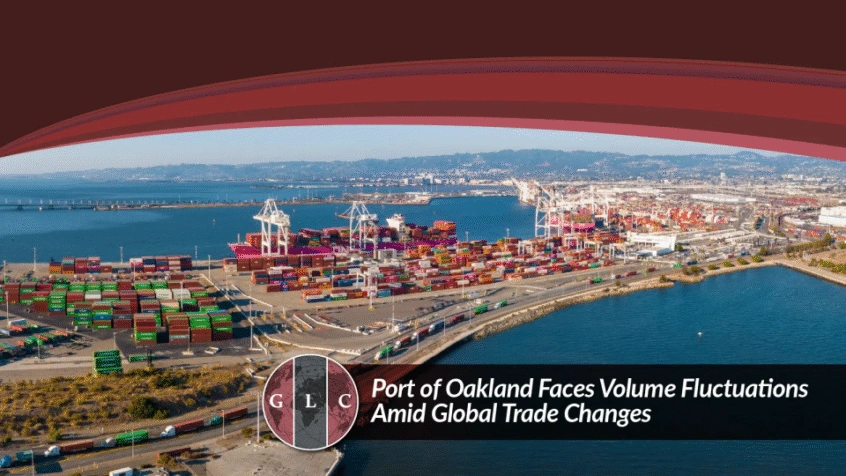
Port of Oakland Faces Volume Fluctuations Amid Global Trade Changes
The Port of Oakland, a critical gateway for U.S.-Asia trade, is experiencing significant shifts in cargo volumes due to evolving tariffs and trade policies. These changes are altering shipping patterns, prompting companies to reevaluate supply chain strategies and port utilization. Recent tariff adjustments have increased costs for certain imports, influencing the volume of goods moving through Oakland. As carriers adjust routes to optimize profitability, shippers … Read More
China’s growth slows as Trump tariff war and property slump bite
China’s growth trajectory has weakened as two powerful forces converge: an intensified tariff campaign from the United States and the ongoing drag from a troubled property market. Together, these factors are reducing domestic consumption, slowing investment, and altering patterns of global trade, with real consequences for shipping volumes, routing decisions, and inventory strategies worldwide. For supply-chain and logistics leaders, the shift is practical, not theoretical. … Read More
U.S.–Colombia Relations at Risk: Trump Threatens New Tariffs
In a sudden escalation that rippled through global trade headlines, President Donald Trump announced that the U.S. would end aid to Colombia and impose new tariffs on Colombian exports. The announcement followed public accusations that Colombian President Gustavo Petro had failed to curb drug production, a claim Petro strongly rejected as “an attack on national sovereignty.” What might appear to be a diplomatic dispute is … Read More

US Plans 100% Tariffs On China And How Beijing Is Responding
President Trump said the U.S. will impose an additional 100% tariff on all imports from China, citing a “mineral trade dispute” after Beijing tightened controls on rare-earth exports. In his announcement, he indicated the move could begin “November 1st, 2025 (or sooner, depending on any further actions…)”, a signal to importers that policy risk is now immediate, not theoretical. Other major outlets report the same … Read More
Another Tariff Expansion: Foreign Duties May Prompt U.S. Tariffs
On September 6, 2025, the White House issued an Executive Order modifying the scope of reciprocal tariffs and establishing new procedures for implementing trade and security agreements. For supply chain leaders in industries like e-commerce, automotive, pharmaceuticals, and CPG, this marks another important shift in the trade landscape. Understanding these changes, and how to adjust your logistics strategy, will be critical to minimizing risk and … Read More
Compliance Alert: India Imports Now Face 50% Tariffs
On August 27, 2025, at 12:01 a.m. EDT, a new trade measure from the White House takes effect: imports from India will now face a total tariff of 50% when entering the United States. This includes: An additional 25% tariff announced on August 26, 2025, in response to India’s continued importation and resale of Russian Federation oil. The existing 25% tariff already applied under Executive … Read More
The End of U.S. Duty‑Free De Minimis
The White House has issued a sweeping executive order that eliminates the longstanding “de minimis” duty-free exemption for low-value imports, effective August 29, 2025. Under 19 U.S.C. §1321(a)(2)(C), shipments valued at $800 or less per person per day were previously allowed into the U.S. without duties or formal customs processing. CBP reports that the volume of de minimis shipments grew from 134 million in 2015 to more than 1.36 billion in 2024. However, … Read More
Reciprocal Tariffs: Current Details as of July 31
Although the reciprocal tariffs are slated to take effect on Aug. 1, the most up‑to‑date information comes from the July 31 announcement. Annex II of the executive order issued at that time lists each affected country and the percentage of additional duty that will be added to its existing Harmonized Tariff Schedule rate. For every country‑specific entry the order repeats the same conditions: the additional duty does not … Read More
U.S. Customs User Fees to Adjust on October 1, 2025
U.S. Customs and Border Protection (CBP) has announced upcoming adjustments to select customs user fees, including changes to the Merchandise Processing Fee (MPF) for formal entries, effective October 1, 2025. These changes are being implemented in accordance with the Fixing America’s Surface Transportation Act (FAST Act), which authorizes annual inflation-based fee updates. What’s Changing? While the MPF ad valorem rate of 0.3464% will remain unchanged, … Read More
EU and USA Trade Pact Reignites Cross-Atlantic Supply Chains
July 31, 2025 | Trade & Logistics Update In a major breakthrough, the United States and European Union have reached a landmark agreement to suspend billions of dollars in retaliatory tariffs and establish a new cooperative trade framework. Announced over the weekend and formally introduced by President Trump on July 28, the deal is being hailed as a turning point in U.S.–EU trade relations, potentially … Read More
How U.S. Tariffs Quietly Crushed Peak Shipping Season
As August 1st approaches, it’s clear that this year’s peak season never truly arrived. Despite ocean carriers’ attempts to raise freight rates through a General Rate Increase (GRI), market conditions simply wouldn’t cooperate. Soft demand, shifting tariff timelines, and volatile policy swings under the so-called “TACO” strategy have upended traditional shipping cycles. Rates for August are now falling, not rising, and with booking volumes down … Read More
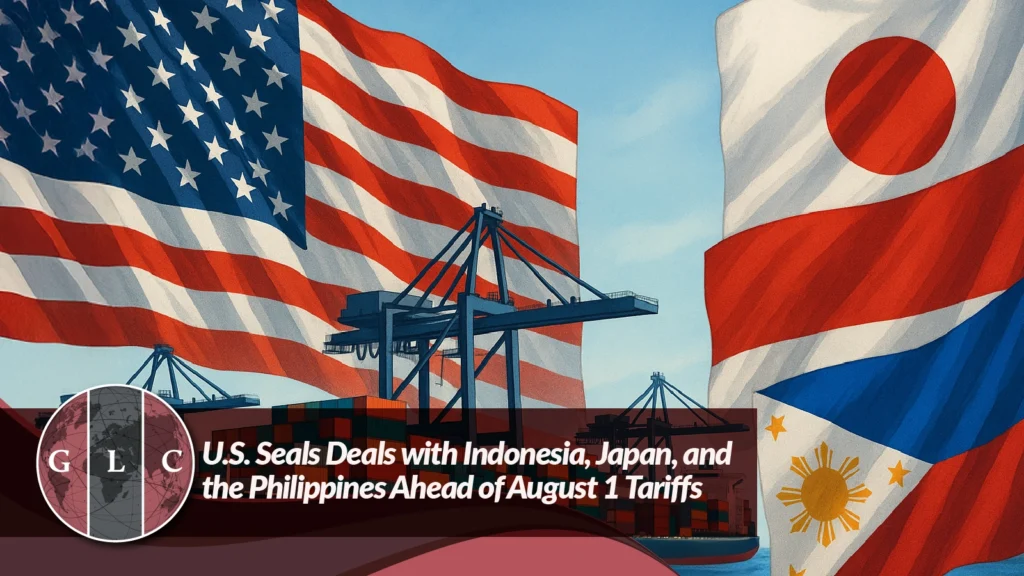
U.S. Seals Deals with Indonesia, Japan, and the Philippines Ahead of August 1 Tariffs
With just days left until August 1st, when a new wave of U.S. tariffs is set to take effect, some countries have successfully struck deals with Washington to ease the impact on their exports. These agreements, along with retaliatory measures from the European Union and updates on negotiations with other key nations, signal major shifts for global supply chains. Here’s what you need to know: … Read More
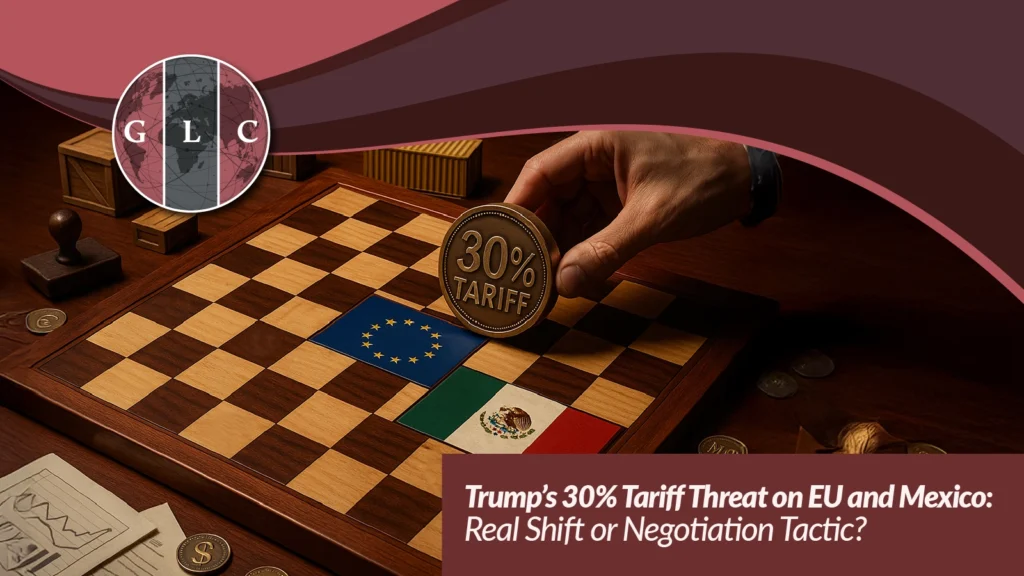
Trump’s 30% Tariff Threat on EU and Mexico
On July 12, 2025, President Donald Trump announced plans to impose 30% tariffs on nearly all imports from the European Union and Mexico, with the measures scheduled to take effect on August 1. The announcement, made via Truth Social, marks one of the most aggressive trade moves in recent history and has triggered global concern, from diplomatic circles to financial markets. What’s Behind the Tariff … Read More
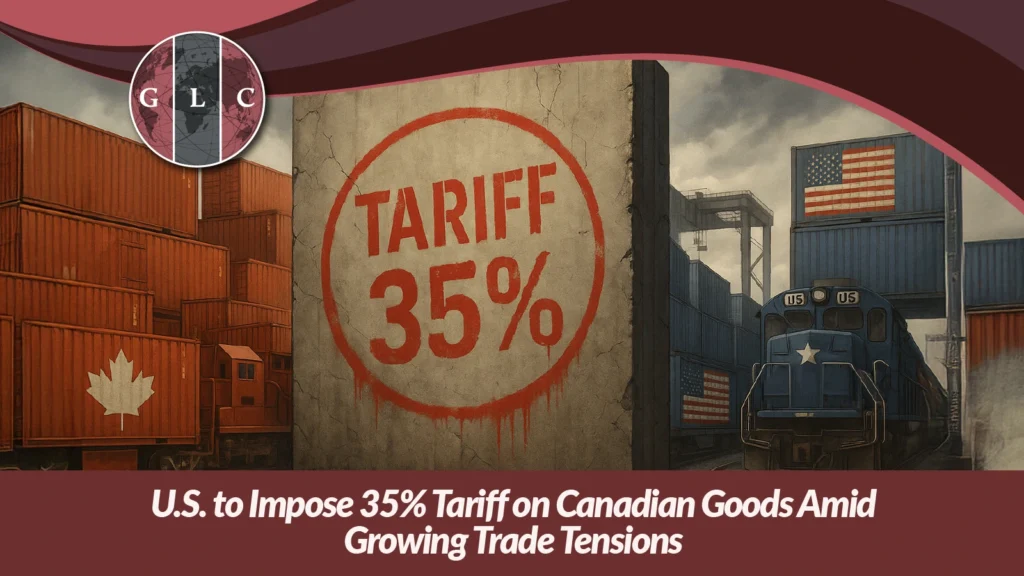
U.S. to Impose 35% Tariff on Canadian Goods
In a major escalation of trade tensions, President Trump announced that the United States will impose a 35% tariff on Canadian-origin goods starting August 1, 2025. The decision, shared via social media late on July 10, was justified by the administration as a response to several concerns: the flow of illicit fentanyl across the northern border, Canadian tariffs on U.S. dairy, and ongoing non-tariff trade … Read More
New Round of Country-Specific Tariff Letters Announced
With less than a month until new tariffs take effect, the U.S. has accelerated its rollout of country-specific reciprocal tariff letters, now reaching 22 countries in total. These tariffs are set to be enforced at 12:01 a.m. EDT on August 1, following the expiration of the current extension period. These tariffs fall under the country-specific reciprocal tariff framework, a policy intended to address long-standing trade … Read More
Massive U.S. Tariff Increases Coming August 1st
In a strategic and unilateral move, the U.S. government has extended its tariff pause from July 9 to August 1, 2025, and implemented new tariff rates for 14 countries, including key trade partners like Japan, South Korea, Malaysia, and Indonesia. On July 7, 2025, President Trump invoked the International Emergency Economic Powers Act (IEEPA), the National Emergencies Act, and the Trade Act of 1974, reaffirming a national emergency over … Read More

Historic U.S.–Vietnam Trade Pact Redefines Market Access
In a significant development on the global trade front, President Donald Trump announced a new trade agreement between the United States and the Socialist Republic of Vietnam. The deal, struck following direct discussions with General Secretary Tô Lâm of the Communist Party of Vietnam, introduces a sweeping framework for tariffs, market access, and cooperation, one that could reshape the economic relationship between the two nations. … Read More

Global Tariff Shake Up: Key Updates from June 2025
The Trump administration has activated a wide-reaching tariff campaign worldwide but paused key reciprocal tariffs until July 9 to allow space for negotiations with the EU and other regions. With only the UK deal finalized so far, all eyes are on whether deals with the EU, China, and Canada can be sealed in the next three weeks. US‑China Framework Takes Shape On June 10 in … Read More

How Middle East Tensions Are Disrupting Supply Chains
On June 13, the global energy market reacted sharply to breaking news: Israel had carried out a strike on Iranian military targets. Early fears suggested a broader escalation could be underway, perhaps even one that would drag in Iran’s critical oil infrastructure. While that didn’t happen (Iran’s oil facilities were untouched), the market didn’t wait for confirmation. Diesel futures spiked nearly 8%. Crude oil prices … Read More

Steel & Aluminum Duties Double Under Trump’s Latest Trade Action
On June 4, 2025, steel and aluminum tariffs in the United States will double, from 25% to 50%, under a new directive by President Donald Trump. This move marks the administration’s latest effort to shield America’s core manufacturing industries from what it calls “unfair trade practices and global excess capacity,” and to restore critical production capabilities that the White House argues are essential to national … Read More

Trump’s Global Tariffs Face Legal Setback After Court Decision
In a landmark decision, the U.S. Court of Appeals for the Federal Circuit has issued a permanent injunction blocking key portions of former President Trump’s tariff program—potentially reshaping U.S. trade policy. The Trump administration has already filed an appeal, setting the stage for a legal showdown that may ultimately reach the Supreme Court. The ruling stems from the case V.O.S. Selections, Inc. v. Trump (Docket … Read More

U.S. and China Agree to 90-Day Tariff Reprive: What It Means for Importers
After weeks of mounting trade tensions, the U.S. and China have struck a deal to significantly reduce import tariffs for 90 days, offering a crucial window of relief for global supply chains. The agreement, announced following high-level talks in Switzerland, will slash mutual tariffs by up to 115%. For many logistics and supply chain leaders, this temporary reprieve is a welcome reset after last month’s … Read More

U.S.-UK Trade Pact Keeps 10% Tariff Wall Intact
On May 8, 2025, President Donald Trump and UK Prime Minister Keir Starmer unveiled a limited trade agreement aimed at easing certain tariffs and expanding market access between the two nations. While the deal marks a diplomatic milestone, it retains the controversial 10% baseline tariff on most UK exports to the U.S., signaling that protectionist policies remain a cornerstone of Trump’s trade strategy. Key Provisions … Read More

EU Prepares Countermeasures Against U.S. Tariffs
Tensions between the United States and European Union are escalating—again. On May 7, the European Commission launched a public consultation on potential retaliatory tariffs targeting a wide swath of U.S. goods. This move comes amid stalled negotiations to resolve newly imposed U.S. duties, including a 20% tariff on EU products and 25% on vehicle imports. The Stakes: €95 Billion in U.S. Goods at Risk The … Read More
Inside U.S. and Peru Trade: What Moved, What’s Next, and Why It Matters
The trade relationship between the United States and Peru is a dynamic and strategic partnership that continues to support economic growth and stability for both nations. This alliance was solidified with the United States–Peru Trade Promotion Agreement (PTPA), signed on April 12, 2006, and officially entering into force on February 1, 2009. Since then, the PTPA has significantly enhanced trade liberalization, removed tariffs on most … Read More
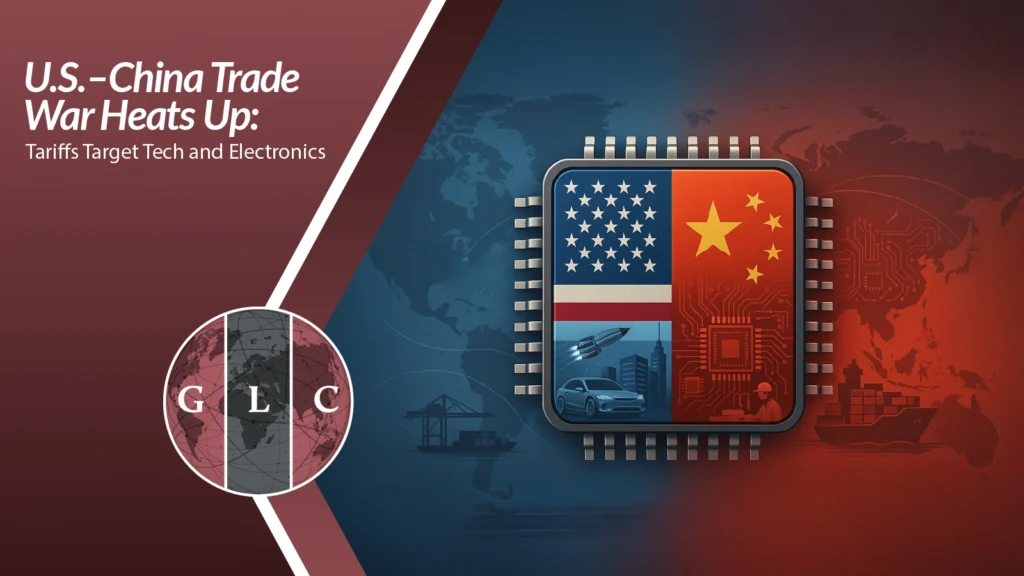
U.S.–China Trade War Heats Up: Tariffs Target Tech and Electronics
The U.S.–China trade relationship is once again in the global spotlight as tensions escalate through a new wave of tariff actions and investigations. While both countries remain locked in a retaliatory tariff cycle, recent developments indicate that the U.S. is expanding its trade enforcement strategy beyond broad-based tariffs, targeting strategic industries like semiconductors, pharmaceuticals, and critical minerals. Spotlight on Semiconductors: The Centerpiece of a New … Read More

In Real Time: Today’s Top Tariff Headlines
Tariff Timeline: A Real-Time Look at 2025’s Key Trade Shifts July30th- New tariffs to India and Additional Duties for Brazil 25% in Imports from India. U.S. President Donald Trump declared that a 25% tariff will be placed on a broad range of imports from India, effective August 1, 2025 Trump also mentioned an unspecified additional penalty tied to India’s ongoing purchases of military equipment and … Read More

U.S.Tariff Update: What You Need to Know as of April 10, 2025
As of April 10, 2025, significant changes to U.S. import tariffs have gone into effect under Executive Order 14257. If you’re moving goods into the U.S., these changes could impact your supply chain and cost structures over the next several months. Here’s a breakdown of what’s changed, what it means for your business, and how to stay compliant. Universal 10% Duty Rate – Country-Specific Tariffs … Read More

US to Slap 104% Tariff on China After Deadline Expires
In a significant escalation of trade tensions, the United States has confirmed the implementation of a 104% tariff on Chinese imports, effective 12:01 a.m. ET on Wednesday. This move follows China’s refusal to withdraw its 34% retaliatory tariffs on American goods by President Trump’s Monday deadline. The White House emphasized that this action aims to address longstanding trade imbalances and unfair practices by China. White … Read More

“Liberation Day” Arrives: U.S. Unveils Sweeping New Tariffs
President Donald Trump marked what he termed a “Declaration of Economic Independence” at the high-profile “Make America Wealthy Again” event, announcing comprehensive new tariffs aimed at reshaping America’s trade relationships globally. Dubbed “Liberation Day” by the administration, the strategy introduces a baseline tariff of 10% on virtually all imports into the U.S., significantly altering the landscape of international commerce. A Strategic Shift in Global Trade … Read More

Brazil and USA: Imports, Exports & Key Commodities
Brazil and the USA maintain a strong and diversified trade relationship, which reached a total goods exchange of $92 billion in 2024. According to the U.S. Trade Representative, U.S. exports to Brazil rose by 11.3% from 2023, totaling $49.7 billion. Imports from Brazil to the U.S. also grew, reaching $42.3 billion, an 8.3% increase compared to the previous year. Trade Agreements between both countries In … Read More

Steel Tariffs: A New Challenge for the Automotive Industry
President Donald Trump’s tariffs on imported steel and aluminum have officially gone into effect. While these tariffs do not directly target vehicles, the resulting increase in steel and aluminum costs is expected to raise manufacturing expenses, inevitably pushing up the prices consumers pay for cars. Rising Car Prices A proposed 25% tariff on imported vehicles could lead to substantial price increases. For example, a car … Read More

Canada and EU Hit Back: How Trump’s New Tariffs Are Shaking Global Trade
On March 12, 2025, President Donald Trump’s administration implemented a 25% tariff on all imported steel and aluminum, marking a significant shift in U.S. trade policy. This move aims to bolster domestic metal industries but has sparked widespread debate and concerns about potential economic repercussions. The decision to impose these tariffs was announced on February 10, 2025, with the intent to reduce reliance on foreign … Read More

How to Import Goods into Colombia: Your Complete Guide
Are you looking to expand your business into the Colombian market or simply interested in importing goods to Colombia? Importing into Colombia can be straightforward if you follow the correct steps and understand the essential requirements. Here’s a practical guide to help you navigate the importation process efficiently. Step-by-Step Import Process: 1. Find a Local Importer or Register as an Importer To import goods into … Read More

White House Suspends Tariffs on Canadian and Mexican USMCA Goods—AGAIN!
In an important development impacting trade relations within North America, the White House announced today that effective 12:01 a.m. EST on March 7, 2025, the recently imposed International Emergency Economic Powers Act (IEEPA)-based tariffs on goods from Canada and Mexico will be temporarily suspended for all products compliant with USMCA origin requirements. This temporary suspension will remain in effect until April 2, 2025, the date … Read More

Trump Halts Tariffs on Mexican Imports – But for How Long?
The trade landscape took another sharp turn this week as President Donald Trump announced a temporary pause on tariffs for Mexican goods covered under the United States-Mexico-Canada Agreement (USMCA). This decision, which grants a reprieve until April 2, comes amid heightened economic uncertainty, market fluctuations, and growing concerns from businesses about rising costs. A Strategic Pause Amid Trade Tensions After discussions with Mexican President Claudia … Read More
Canada Hits Back with $155B in Tariffs on U.S. Goods
“The moment U.S. tariffs came into effect this morning, so did the Canadian response. Canada will be implementing 25% tariffs against $155 billion of American products. Starting with $30 billion worth of goods immediately, and the remaining $125 billion in 21 days’ time”, was a LinkedIn post from Canadian Prime Minister, Justin Trudeau. This decisive move by Prime Minister Trudeau marks a significant escalation in … Read More
New Guidance on Additional Tariffs for Canadian Imports
As of March 4, 2025, new additional duties on imports from Canada are officially in effect. These tariffs, imposed under Executive Order 14193, are part of the U.S. government’s efforts to combat the flow of illicit drugs across the northern border and strengthen national security. If your business imports goods from Canada, it’s crucial to understand the changes and ensure compliance with U.S. Customs and … Read More
CBP’s Update on Increased Tariffs for Imports from China and Hong Kong
The U.S. government has escalated its trade measures against China and Hong Kong, doubling additional duties on imports from these regions. As of March 4, 2025, new tariffs of 20% apply to most imports, reflecting the latest action under the Executive Order on the Synthetic Opioid Supply Chain signed on March 3, 2025. U.S. Customs and Border Protection (CBP) has provided updated guidance for businesses … Read More
Zero Hour: Trump’s Tariffs on Canada, Mexico, and China Take Effect
The wait is over. After weeks of speculation and debate, President Donald J. Trump has officially imposed tariffs on imports from Canada, Mexico, and China. These sweeping measures, effective today, mark a bold move in the administration’s effort to tackle drug trafficking, illegal immigration, and trade imbalances. While the world watched, markets braced for impact, businesses scrambled to adjust, and global leaders weighed their responses. … Read More
Tariffs, Inflation, and Investment: The Unfolding Economic Impact
The recent imposition of tariffs by President Donald Trump has ignited significant debate among economists and industry experts about their potential consequences for the U.S. economy. While the administration asserts that these measures aim to protect domestic industries and reduce trade deficits, critics warn of possible adverse effects, including increased consumer prices, investment deterrence, and economic stagnation. One of the immediate concerns surrounding tariffs is … Read More

Trump Announces 25% Tariffs on Steel and Aluminum Imports
In a move set to shake global markets and intensify ongoing trade disputes, U.S. President Donald Trump announced plans to introduce new 25% tariffs on all steel and aluminum imports. This decision, revealed to reporters aboard Air Force One en route to the Super Bowl in New Orleans, marks a significant escalation of Trump’s aggressive trade policy. Key Highlights of the Announcement: New 25% Tariffs: … Read More
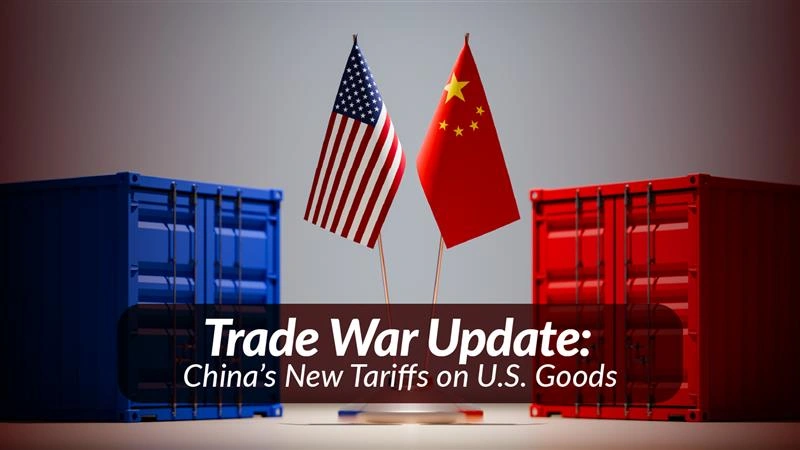
Trade War Update: China’s New Tariffs on U.S. Goods
The commercial trade war between the U.S. and China continues to escalate as both nations levy tariffs on each other’s goods. China recently announced it would impose additional tariffs on U.S. imports starting on February 10th in retaliation for the Trump administration’s earlier tariff actions. This move has significant implications for global trade, particularly in industries like energy, agriculture, and automobiles. At the same time, … Read More

Countdown to Tariffs: Mexico and Canada in Uncertainty
From February 1st, the United States will impose a 25% tariff on imports from Mexico and Canada, setting off a new wave of uncertainty for the North American supply chain. With this new measure, multiple questions about how businesses will navigate the coming changes are emerging. President Trump’s announcement has raised numerous concerns, leaving industry stakeholders scrambling to clarify everything from logistics to compliance. The … Read More

Texas Ports Resume Operations After Winter Storm Enzo
Winter Storm Enzo, which recently swept through Texas, Louisiana, and Florida, caused significant disruptions across the region, including major shipping hubs. The storm, which brought rare snowfalls and extreme winter conditions, forced several Texas ports to temporarily shut down. However, as the storm moves out and conditions improve, port operations are gradually resuming. This recovery is crucial for both regional and global supply chains, especially … Read More

Are Ocean Carriers Headed Back into Choppy Financial Waters?
A ceasefire in the war between Israel and Hamas has opened fresh considerations for the global shipping sector, which is already grappling with a range of economic and geopolitical challenges. Over the past few years, the ocean shipping industry has been on a rollercoaster of market volatility, with disruptive economic conditions and shifting supply chain demands driving cargo rates skyward—at least until recently. Now, many … Read More

No Strike on the Horizon: ILA and USMX Reach Agreement
The new year is off to a promising start for America’s ports and the global supply chain. On January 8, 2025, the International Longshoremen’s Association (ILA) and the United States Maritime Alliance (USMX) announced they had reached a tentative six-year master contract agreement—effectively averting a strike that could have disrupted shipping operations across the East and Gulf coasts. What Does the Agreement Mean? No Immediate … Read More

Potential ILA Strike Threatens Supply Chains – Are You Ready?
The negotiations between the International Longshoremen’s Association (ILA) and the United States Maritime Alliance (USMX) have hit a significant impasse, driven by disagreements over port automation. After walking away from talks in November 2024, the ILA has warned of a potential strike if their demands are not met before the January 15, 2025 deadline. The ILA’s stance remains firm, and a strike could lead to … Read More

Impact of Future Tariffs on Freight Forwarding
As global trade evolves, businesses involved in importing and exporting face an increasingly complex challenge: navigating fluctuating tariffs. These taxes on imported goods profoundly affect costs, disrupt supply chain efficiency, and erode profitability. For companies reliant on reliable freight forwarders for exports, understanding the implications of upcoming tariff changes and proactively adapting strategies is essential to remain competitive in a dynamic global marketplace. The Ripple … Read More

Post-Election Concerns and how to be prepared
As the dust settles after the recent elections, businesses in the supply chain industry face a rapidly changing landscape. Policy shifts, tariff revisions, and international trade tensions are poised to redefine how goods move across borders. The upcoming Chinese New Year in February 2025 adds another layer of complexity, bringing seasonal disruptions to an already strained global supply chain. In this blog, we’ll explore these … Read More

What Does the Renewal of the GSP Mean for Trade?
The Generalized System of Preferences (GSP) is a long-standing U.S. trade program aimed at fostering economic growth in developing countries while benefiting American businesses. By allowing duty-free imports of eligible products from designated countries, the GSP promotes economic stability abroad and provides U.S. companies with cost-effective access to essential goods. However, this program has been expired since December 31, 2020, leaving many traders in a … Read More

U.S.-China Trade War: Redrawing the Global Economic Landscape
As the U.S.-China trade war heats up again, the world’s two largest economies are at a pivotal juncture. With the second Trump presidency and escalating tariffs, China’s economic strategies and its ambitions to become a high-tech powerhouse face renewed scrutiny. Trump’s Trade Agenda and Its Global Ripple Effect Donald Trump’s proposed tariff hikes, which could reach as high as 60% on Chinese goods, represent a … Read More

The Importance of the SLI in International Logistics
In the global logistics industry, documentation is the backbone of efficient and compliant shipping processes. One critical document, the Shipper’s Letter of Instruction (SLI), holds a unique position in international trade, guiding freight forwarders and customs brokers with essential shipment details. Understanding the SLI’s role and its benefits is vital for shippers who want to streamline their logistics operations, minimize errors, and ensure regulatory compliance. … Read More

Why GLC is the Ideal Partner for USA Exports
Expanding your business overseas is full of possibilities—but it’s not without its challenges. Navigating regulations, managing logistics, and ensuring that products arrive on time and in perfect condition requires an expert touch. That’s where Global Logistical Connections (GLC) comes in. With a comprehensive approach and unmatched expertise, GLC takes the complexity out of exporting, giving you peace of mind and a reliable path to international … Read More

The Future of Supply Chain in 2025: Key Trends to Watch
As we move towards 2025, the global supply chain landscape is poised for transformative changes driven by technology, sustainability, and changing market dynamics. The lessons learned from recent disruptions, such as the COVID-19 pandemic, have pushed businesses to adopt more resilient, flexible, and transparent supply chains. This blog explores the key trends expected to shape supply chains in 2025, providing insights for companies looking to … Read More

CBP Now Rejecting Vague Cargo Descriptions in ACAS
As international shipping continues to evolve, U.S. Customs and Border Protection (CBP) has officially begun enforcing stricter rules on the accuracy of cargo descriptions in the Air Cargo Advance Screening (ACAS) program. As of October 7, 2024, carriers and other stakeholders submitting ACAS data must ensure that the descriptions of their cargo are precise and transparent. Vague terms such as “gift,” “daily necessities,” “accessories,” “parts,” … Read More
Thanksgiving & Black Friday Supply Chain Challenges
As Thanksgiving and Black Friday approach, the logistics and supply chain industry faces unique challenges, with supply chains being heavily impacted during this high-demand period. Companies across various sectors, from retail to technology, are gearing up for the holiday season, but disruptions in supply chains can cause delays and inefficiencies. Here’s a look at how the holiday season affects supply chains and what businesses can … Read More

Dockworkers’ Strike Paused: Future Impacts on U.S. Ports
In recent weeks, the possibility of a dockworkers’ strike on the West Coast had many industries bracing for significant supply chain disruptions. However, a recent development has brought a temporary reprieve: the strike has been suspended after an agreement was reached between the International Longshore and Warehouse Union (ILWU) and port operators. This deal, while providing immediate relief, leaves questions about long-term stability unresolved, keeping … Read More

How Businesses Can Prepare for Hurricane Milton’s Impact on Florida’s Ports
As Hurricane Milton barrels toward Florida, threatening to become a Category 5 storm, businesses across the region are bracing for significant disruptions. With major ports in Florida, such as those in Miami, Jacksonville, and Tampa, expected to shut down or operate at limited capacity, the impact on supply chains could be profound. Now is the time for companies to take strategic action to minimize the … Read More

Port Strike Ends as Workers Secure New Deal: Impacts on Global Trade and Supply Chains
A major labor dispute that disrupted operations across key U.S. ports has finally come to an end. The port strike, which caused widespread delays and economic uncertainty, concluded after workers and port employers reached a tentative agreement. With wages increased and working conditions improved, the resolution brings relief to businesses that rely on uninterrupted trade flows, especially as the busy holiday season approaches. The strike … Read More

Rate Increases Expected Due to Potential East Coast Strikes
With the looming threat of labor unrest on the U.S. East Coast and Gulf Coast, the shipping industry is bracing for significant rate increases. Several major carriers, including Evergreen, HMM, CMA CGM, Maersk, and Yang Ming, have issued announcements about impending surcharges designed to mitigate the operational disruptions expected if strikes or other labor-related slowdowns materialize. These rate hikes, set to take effect in mid-to-late … Read More

The Impact of Typhoons on Global Supply Chains
In recent years, typhoons have become a growing concern for industries worldwide, particularly in the agricultural sector and global supply chains. As climate change intensifies, these powerful storms are causing unprecedented disruptions, leading to billions in losses and a ripple effect across multiple industries. The most recent analysis by FreightWaves highlights the severity of the situation, offering insights into how these natural disasters are reshaping … Read More

Biden Cracks Down on Unsafe De Minimis Shipments
In a significant move to protect American consumers, workers, and businesses, the Biden-Harris administration has announced new measures to crack down on de minimis shipments—low-value imports that often bypass traditional scrutiny. These shipments, typically valued under $800, have been increasingly exploited to flood the U.S. market with unsafe or unfairly traded goods. The new actions focus on enhancing oversight and enforcing stricter trade practices to … Read More

How to Mitigate Disruptions from the Upcoming ILA Port Strike
The looming strike by the International Longshoremen’s Association (ILA), set to begin on October 1, 2024, threatens to disrupt major ports along the East and Gulf Coasts. The ILA is in a contentious battle with the U.S. Maritime Alliance over wages and job security, especially regarding automation. As Dennis Daggett, ILA Executive Vice President, stated, the union is fighting against “corporate greed” and will be … Read More

Preparing for Chinese Golden Week: A Critical Time for the Logistics Industry
As we approach Chinese Golden Week, it’s essential for everyone in the logistics industry to understand the significant impact this holiday can have on global supply chains. Golden Week, which takes place in the first week of October, is one of the largest national holidays in China, celebrating the founding of the People’s Republic of China. While it’s a festive time across the country, for … Read More

Imminent Gulf Coast Ports Strike Set to Begin in October
As the possibility of a strike at the US East and Gulf Coast ports looms, the global logistics and shipping industry is bracing for significant disruptions. Set to commence on October 1, this strike could create a ripple effect across international supply chains, affecting everything from freight costs to delivery timelines. The upcoming strike stems from a deep-rooted conflict between the International Longshoremen’s Association (ILA) … Read More