
September begins with a complicated Transpacific ocean freight environment for U.S. importers. Capacity is being actively managed, rate pressure remains elevated, Panama Canal operating conditions are changing, and companies are beginning to position their next wave of Q4 cargo. The important point is that a softer import-demand forecast does not automatically mean easier shipping conditions. GLC’s recent Transpacific ocean freight market update identified 14 blank … Read More
Transpacific Ocean Freight August 2026: Rates & Blank Sailings
Transpacific ocean freight in August 2026 is entering another period of tighter capacity, increasing rate pressure and greater routing complexity. For U.S. importers moving cargo from Asia, the next several weeks deserve particular attention as blank sailings, General Rate Increases, equipment constraints and Panama Canal conditions converge ahead of September. Current market intelligence provided to Global Logistical Connections indicates that 14 blank sailings are scheduled … Read More
Exporting to Mexico in 2026: T-MEC & Freight Guide
Mexico remains one of the most important markets for North American supply chains. For U.S. and Canadian companies, exporting to Mexico in 2026 is closely tied to regional manufacturing, cross-border trucking, customs compliance, and the evolving T-MEC/USMCA environment. But moving cargo southbound requires more than booking a truck. Exporters need to understand rules of origin, Mexican customs documentation, tariff classification, transportation requirements, and the operational … Read More
CPSC eFiling Is Now Mandatory: What Importers Must Know About Electronic Certificates of Compliance
As of July 8, 2026, the U.S. Consumer Product Safety Commission (CPSC) has officially launched its mandatory electronic filing (eFiling) program. If your company imports regulated consumer products into the United States, this change directly impacts how you submit compliance documentation at the border. Understanding the new requirements and preparing your internal processes is no longer optional, it is a condition of clearing customs. At GLC … Read More
Ocean Freight Q3 2026: BAF Surcharges Are Rising. Here’s What Importers Should Review Before Booking
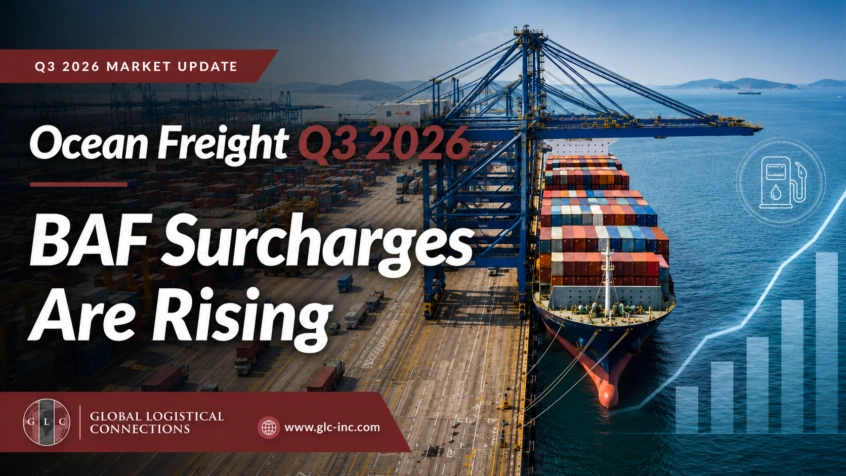
Ocean Freight Q3 2026 is entering a more complex pricing and capacity environment. For importers, the challenge is no longer simply finding the lowest base ocean rate. Fuel-related surcharges, early peak-season demand, carrier capacity management, blank sailings, and tighter booking windows are all influencing the true cost and reliability of moving cargo. One of the biggest changes came with the July quarterly fuel surcharge reset. … Read More
USMCA 2026 Review: What North American Importers Need to Plan For Now
The USMCA 2026 review is no longer a distant policy milestone. It is now one of the most important trade developments for companies moving goods across the United States, Mexico, and Canada. For importers, exporters, manufacturers, and supply chain teams, the review introduces a new planning environment where compliance, documentation, origin strategy, and cross-border logistics must be evaluated together. On July 1, 2026, the United … Read More
CPSC eFiling Becomes Mandatory July 8, 2026: What Importers Need to Prepare Now
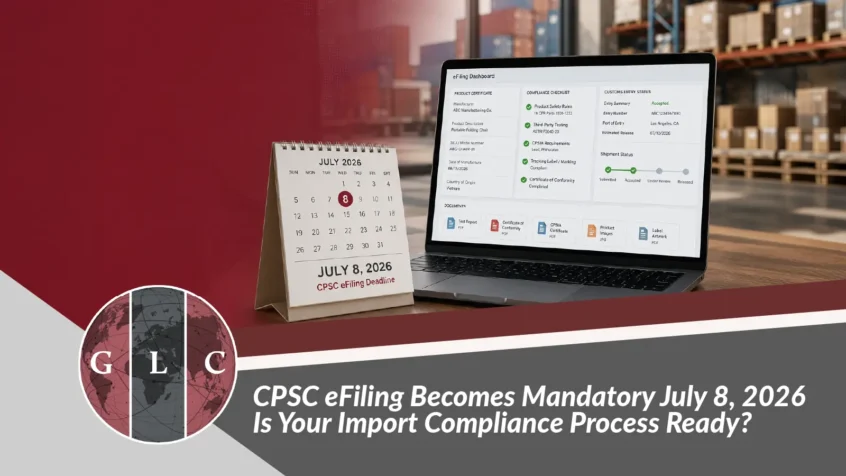
Beginning July 8, 2026, importers of regulated consumer products will face a major change in how product safety certificate information is submitted during the U.S. customs entry process. Under the U.S. Consumer Product Safety Commission’s new eFiling requirements, paper or PDF Certificates of Compliance will no longer be enough on their own for covered imported products. Instead, required certificate data must be submitted electronically as … Read More
Section 301 Forced Labor Tariffs: What U.S. Importers Need to Know

The Office of the United States Trade Representative has announced findings and proposed action in 60 Section 301 investigations related to forced labor goods. For U.S. importers, this is not just another trade-policy headline. It is a signal that sourcing transparency, customs readiness, and landed-cost planning may become even more important in the months ahead. On June 2, 2026, USTR determined that the acts, policies, … Read More
Transpacific Rates Are Surging: What Importers Need to Review Before Q3
Transpacific ocean freight rates are moving quickly again, and importers that are still planning against Q1 assumptions may need to revisit their Q3 strategy now. The issue is not only the base ocean rate. The current market is being shaped by early peak-season demand, carrier capacity management, blank sailings, fuel-related pressure, and new peak season surcharges. For importers moving goods from Asia into the United … Read More
Ocean Freight Rates Are Climbing Again: What Shippers Need to Know for June and July 2026
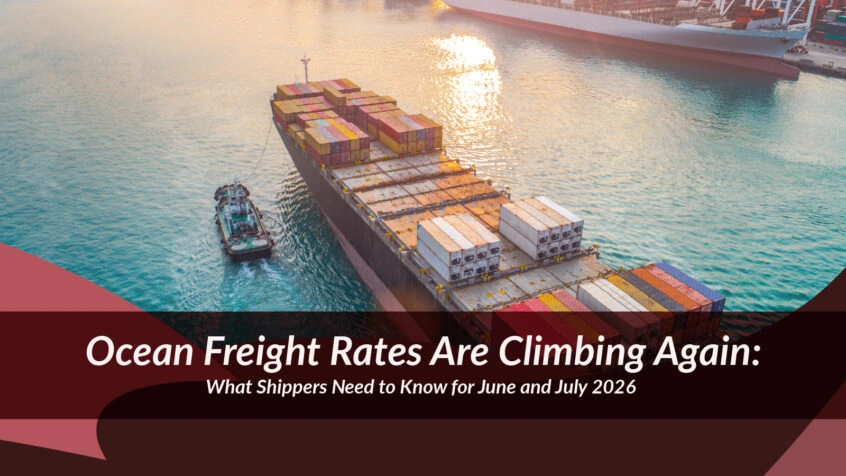
Ocean freight rates have been climbing steadily for the past several weeks, and the pace is accelerating heading into June and July 2026. For importers shipping from China and from South America, the numbers moving through the market right now are not projections. They are active carrier filings, confirmed General Rate Increases, and spot rate data already reflecting a sharp upward move. If your team … Read More