

The booking was confirmed. The purchase order is due before Black Friday. Then the container rolls to the next sailing, and the question lands on your desk: do we fly it? For many importers this fall, the honest answer is “some of it.” Ocean schedules are harder to rely on, but air freight isn’t cheap either. The smartest move is rarely to convert an entire … Read More
September 2026 Ocean Freight: What Importers Should Review

September begins with a complicated Transpacific ocean freight environment for U.S. importers. Capacity is being actively managed, rate pressure remains elevated, Panama Canal operating conditions are changing, and companies are beginning to position their next wave of Q4 cargo. The important point is that a softer import-demand forecast does not automatically mean easier shipping conditions. GLC’s recent Transpacific ocean freight market update identified 14 blank … Read More
Section 338 Tariffs on Canada: What U.S. Importers Need to Know
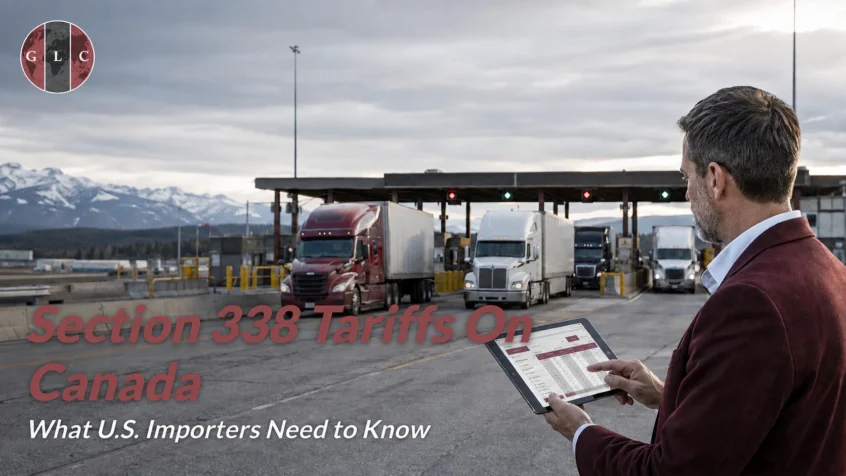
The U.S. – Canada tariff environment changed again in August 2026. After the Trump administration announced additional 50% ad valorem duties on certain Canadian goods under Section 338 of the Tariff Act of 1930, a presidential proclamation temporarily delayed the effective date by three days, from August 19 to August 22, 2026. The Federal Register notice published August 24 confirms the revised effective date of … Read More
Transpacific Ocean Freight August 2026: Rates & Blank Sailings
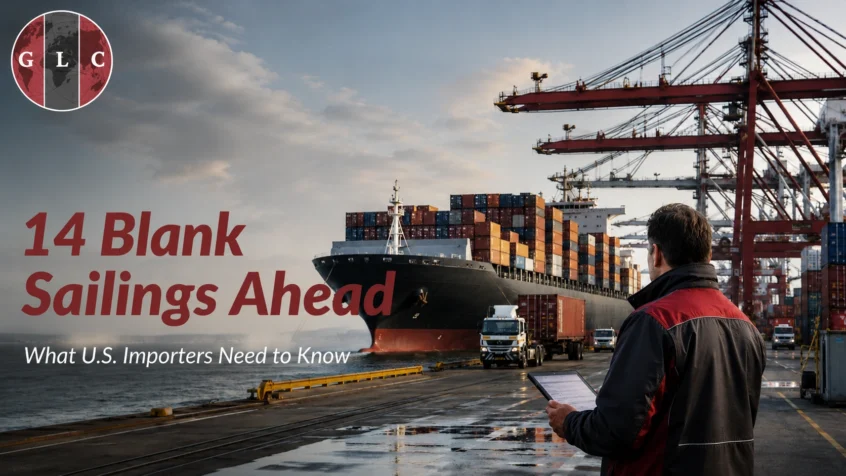
Transpacific ocean freight in August 2026 is entering another period of tighter capacity, increasing rate pressure and greater routing complexity. For U.S. importers moving cargo from Asia, the next several weeks deserve particular attention as blank sailings, General Rate Increases, equipment constraints and Panama Canal conditions converge ahead of September. Current market intelligence provided to Global Logistical Connections indicates that 14 blank sailings are scheduled … Read More
Exporting to Mexico in 2026: T-MEC & Freight Guide
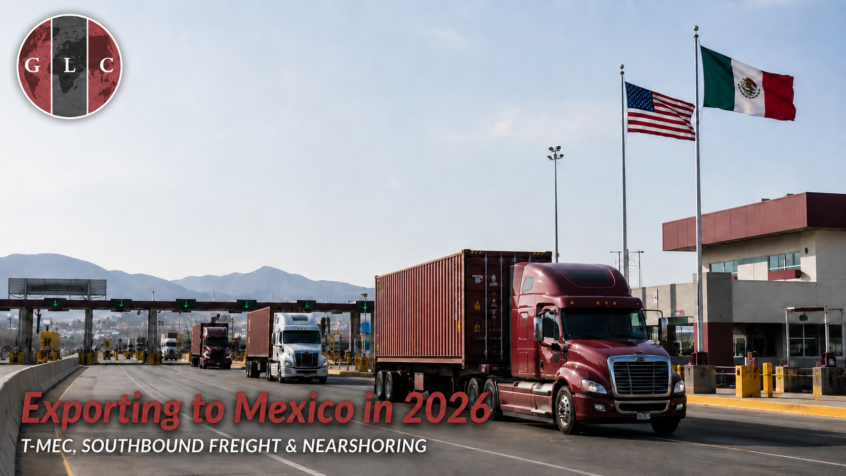
Mexico remains one of the most important markets for North American supply chains. For U.S. and Canadian companies, exporting to Mexico in 2026 is closely tied to regional manufacturing, cross-border trucking, customs compliance, and the evolving T-MEC/USMCA environment. But moving cargo southbound requires more than booking a truck. Exporters need to understand rules of origin, Mexican customs documentation, tariff classification, transportation requirements, and the operational … Read More
PierPASS TMF Increase: What Importers Need to Know
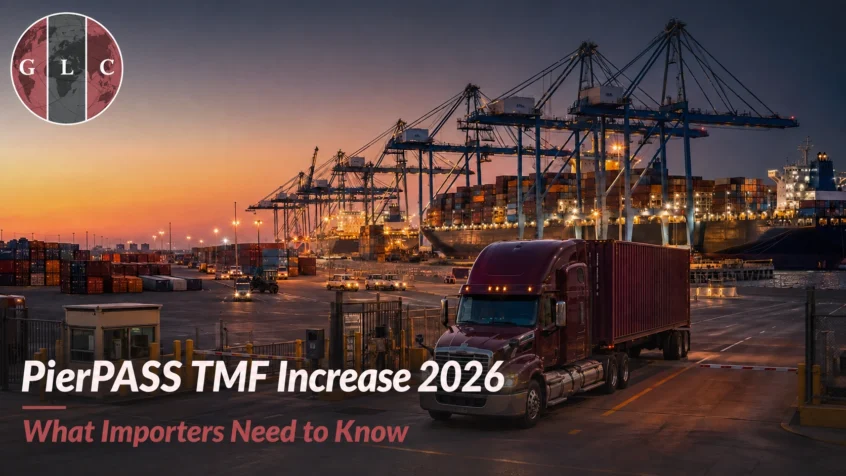
Importers moving containers through Southern California’s San Pedro Bay port complex should update their landed-cost forecasts. Effective August 1, 2026, the PierPASS Traffic Mitigation Fee, or TMF, at the Ports of Los Angeles and Long Beach increased by 4.77%. The new rate is $40.63 per twenty-foot equivalent unit, or TEU, and $81.26 for containers of all other sizes. The increase applies to non-exempt containers handled … Read More
Brazil Section 301 Tariffs: 25% Duty Starts July 22
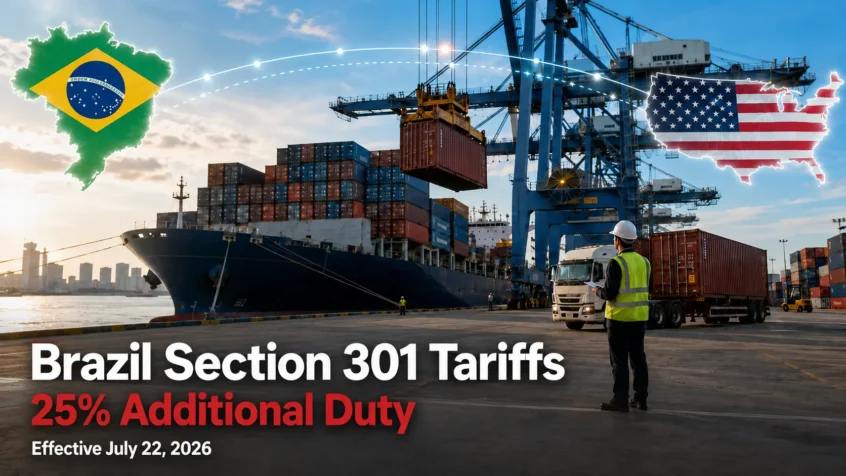
The Office of the United States Trade Representative has finalized a new Section 301 trade action affecting imports from Brazil. Beginning at 12:01 a.m. Eastern Time on July 22, 2026, covered products of Brazil entered for consumption, or withdrawn from a warehouse for consumption, will be subject to an additional 25% ad valorem duty. For U.S. importers, the immediate question is not simply whether a … Read More
Ocean Freight Q3 2026: BAF Surcharges Are Rising. Here’s What Importers Should Review Before Booking
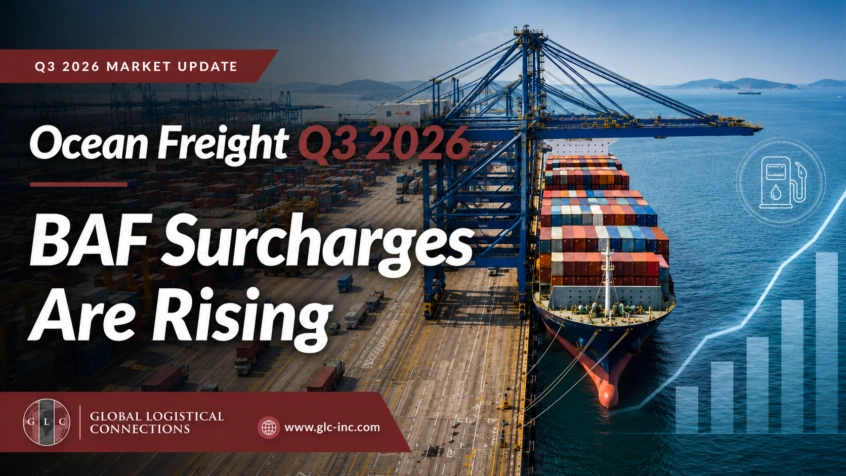
Ocean Freight Q3 2026 is entering a more complex pricing and capacity environment. For importers, the challenge is no longer simply finding the lowest base ocean rate. Fuel-related surcharges, early peak-season demand, carrier capacity management, blank sailings, and tighter booking windows are all influencing the true cost and reliability of moving cargo. One of the biggest changes came with the July quarterly fuel surcharge reset. … Read More
USMCA 2026 Review: What North American Importers Need to Plan For Now
The USMCA 2026 review is no longer a distant policy milestone. It is now one of the most important trade developments for companies moving goods across the United States, Mexico, and Canada. For importers, exporters, manufacturers, and supply chain teams, the review introduces a new planning environment where compliance, documentation, origin strategy, and cross-border logistics must be evaluated together. On July 1, 2026, the United … Read More
CPSC eFiling Becomes Mandatory July 8, 2026: What Importers Need to Prepare Now
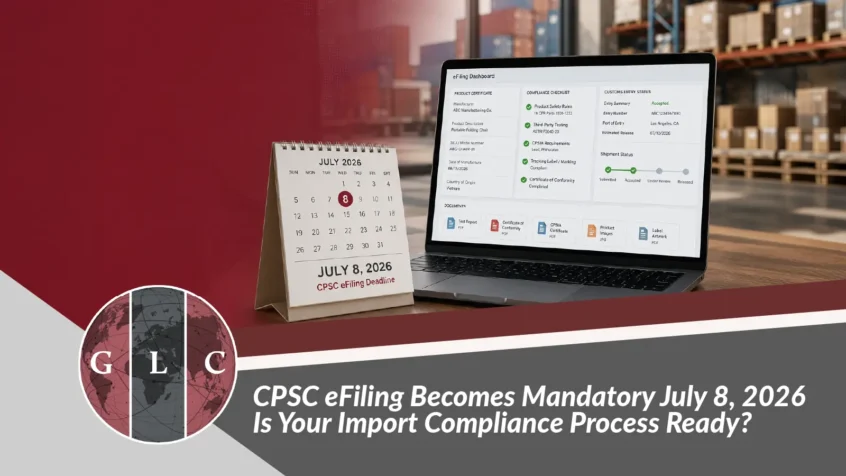
Beginning July 8, 2026, importers of regulated consumer products will face a major change in how product safety certificate information is submitted during the U.S. customs entry process. Under the U.S. Consumer Product Safety Commission’s new eFiling requirements, paper or PDF Certificates of Compliance will no longer be enough on their own for covered imported products. Instead, required certificate data must be submitted electronically as … Read More