
Transpacific ocean freight in August 2026 is entering another period of tighter capacity, increasing rate pressure and greater routing complexity. For U.S. importers moving cargo from Asia, the next several weeks deserve particular attention as blank sailings, General Rate Increases, equipment constraints and Panama Canal conditions converge ahead of September. Current market intelligence provided to Global Logistical Connections indicates that 14 blank sailings are scheduled … Read More
Brazil Section 301 Tariffs: 25% Duty Starts July 22
The Office of the United States Trade Representative has finalized a new Section 301 trade action affecting imports from Brazil. Beginning at 12:01 a.m. Eastern Time on July 22, 2026, covered products of Brazil entered for consumption, or withdrawn from a warehouse for consumption, will be subject to an additional 25% ad valorem duty. For U.S. importers, the immediate question is not simply whether a … Read More
Ocean Freight Q3 2026: BAF Surcharges Are Rising. Here’s What Importers Should Review Before Booking
Ocean Freight Q3 2026 is entering a more complex pricing and capacity environment. For importers, the challenge is no longer simply finding the lowest base ocean rate. Fuel-related surcharges, early peak-season demand, carrier capacity management, blank sailings, and tighter booking windows are all influencing the true cost and reliability of moving cargo. One of the biggest changes came with the July quarterly fuel surcharge reset. … Read More
CPSC eFiling Becomes Mandatory July 8, 2026: What Importers Need to Prepare Now
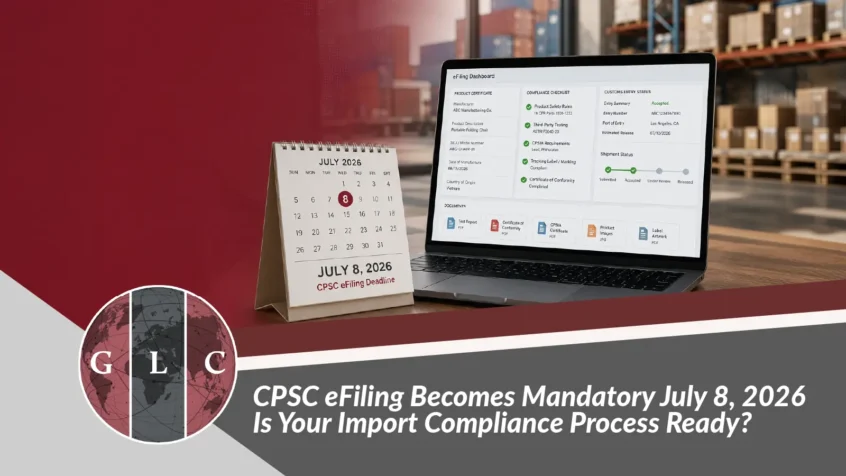
Beginning July 8, 2026, importers of regulated consumer products will face a major change in how product safety certificate information is submitted during the U.S. customs entry process. Under the U.S. Consumer Product Safety Commission’s new eFiling requirements, paper or PDF Certificates of Compliance will no longer be enough on their own for covered imported products. Instead, required certificate data must be submitted electronically as … Read More
Transpacific Rates Are Surging: What Importers Need to Review Before Q3
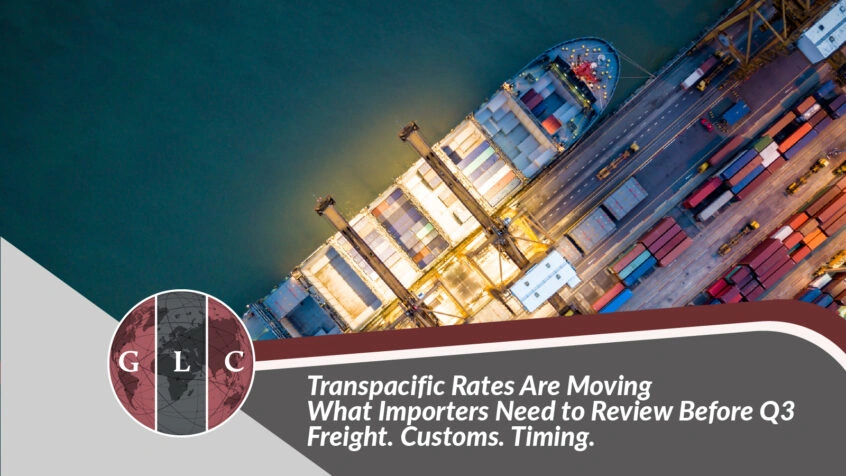
Transpacific ocean freight rates are moving quickly again, and importers that are still planning against Q1 assumptions may need to revisit their Q3 strategy now. The issue is not only the base ocean rate. The current market is being shaped by early peak-season demand, carrier capacity management, blank sailings, fuel-related pressure, and new peak season surcharges. For importers moving goods from Asia into the United … Read More
When Conflict Disrupts the Supply Chain
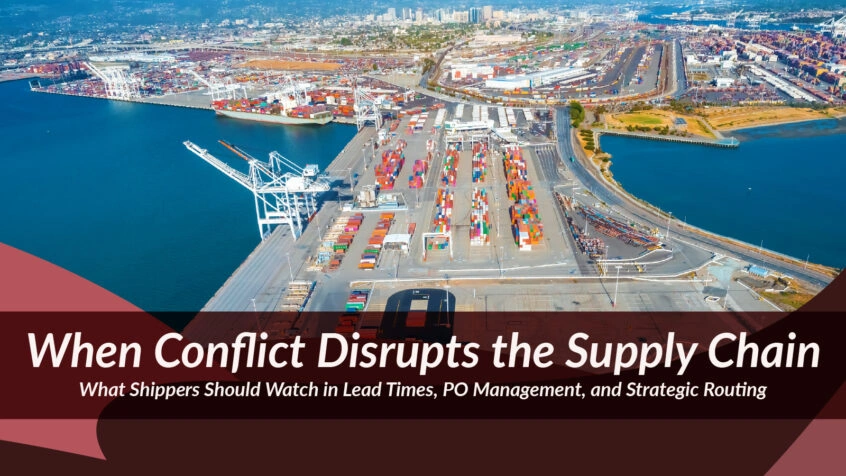
What Shippers Should Watch in Lead Times, PO Management, and Strategic Routing Geopolitical conflict is often discussed in terms of headlines, oil prices, or market reactions. For importers, exporters, and logistics teams, however, the real impact shows up somewhere more immediate: in lead times that stop behaving predictably, purchase orders that require constant reprioritization, and routing decisions that suddenly carry far greater operational and financial … Read More
Another Tariff Expansion: Foreign Duties May Prompt U.S. Tariffs
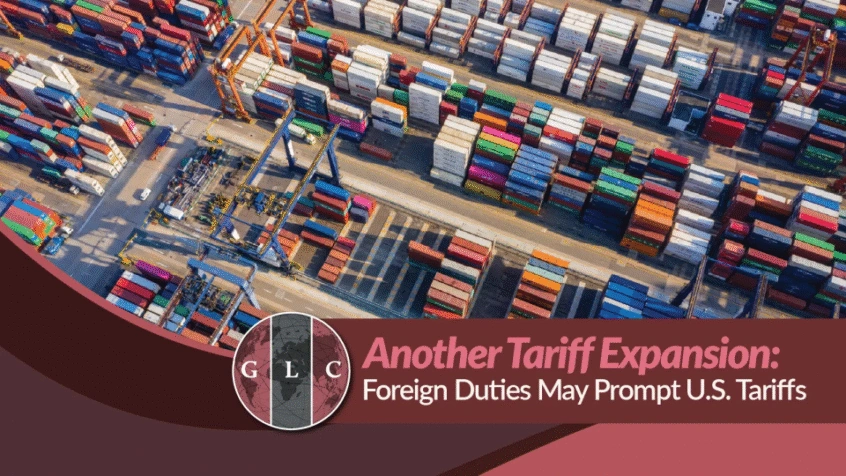
On September 6, 2025, the White House issued an Executive Order modifying the scope of reciprocal tariffs and establishing new procedures for implementing trade and security agreements. For supply chain leaders in industries like e-commerce, automotive, pharmaceuticals, and CPG, this marks another important shift in the trade landscape. Understanding these changes, and how to adjust your logistics strategy, will be critical to minimizing risk and … Read More
How U.S. Tariffs Quietly Crushed Peak Shipping Season

As August 1st approaches, it’s clear that this year’s peak season never truly arrived. Despite ocean carriers’ attempts to raise freight rates through a General Rate Increase (GRI), market conditions simply wouldn’t cooperate. Soft demand, shifting tariff timelines, and volatile policy swings under the so-called “TACO” strategy have upended traditional shipping cycles. Rates for August are now falling, not rising, and with booking volumes down … Read More
May 2024: Navigating International Trade Challenges
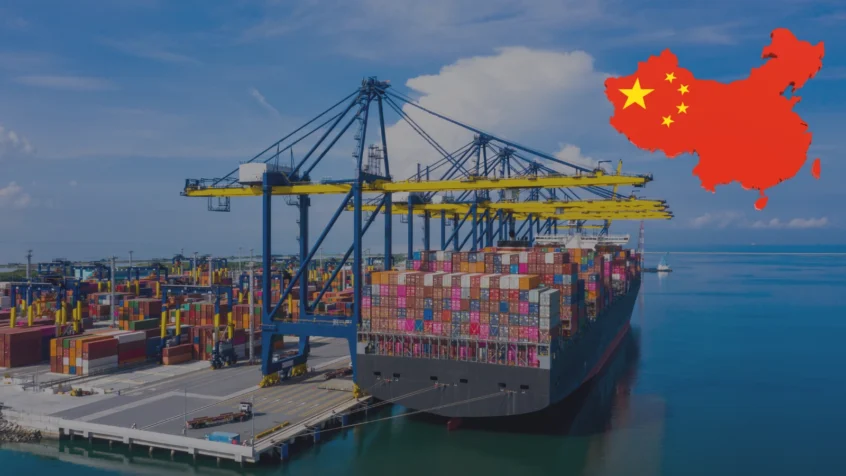
May 2024 is shaping up to be a pivotal month for businesses engaged in international trade, particularly those with operations linked to Asia. The convergence of the General Rate Increase (GRI) and the recent Labour Day holidays in China presents a unique set of challenges for the global logistics sector. This period could impact everything from shipment schedules to freight costs, making advanced preparation crucial … Read More