
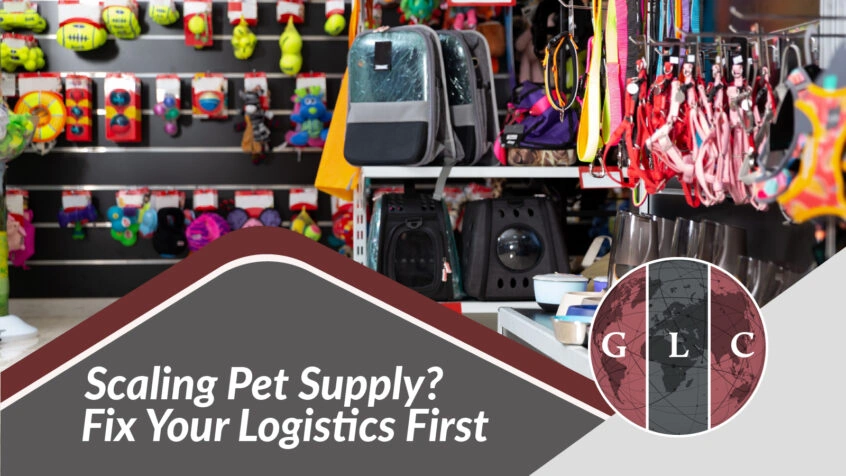
The U.S. pet supply market keeps growing, and that creates a major opportunity for brands selling pet food, treats, toys, grooming products, accessories, and other pet care items. According to the American Pet Products Association, U.S. pet industry spending reached $158 billion in 2025 and is projected to reach $165 billion in 2026. But growth also creates pressure. More SKUs, more import requirements, more retailers, … Read More
Customs Clearance Starts Before Arrival
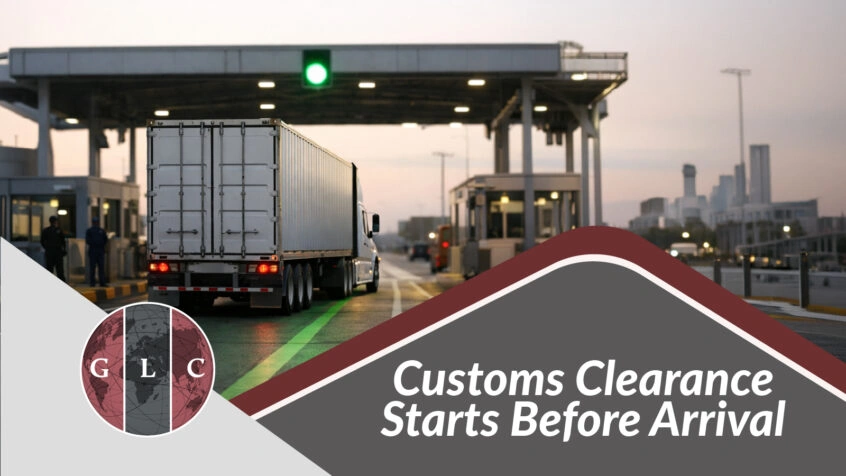
Customs clearance before arrival is one of the most important steps importers can take to reduce delays, avoid compliance gaps, and improve shipment visibility. For many companies, customs clearance feels like something that happens only when cargo reaches the port, airport, or border. In reality, the strongest customs process starts before the shipment moves. A missing invoice, incorrect classification, late Importer Security Filing, inactive customs … Read More
Trends in the Pet Industry and What They Mean for Logistics

The global pet industry continues to evolve at a rapid pace, with sustained growth driven by changing consumer behavior and increased spending across categories, as highlighted by the American Pet Products Association’s industry trends and statistics What was once a stable market centered around basic food and accessories has transformed into a dynamic, innovation-driven sector fueled by premium products, e-commerce growth, and changing consumer expectations. … Read More
Cargo Theft Myths Shippers Still Believe

When many people hear the term cargo theft, they picture a stolen trailer, a broken seal, or a parked truck targeted overnight. That still happens, but the risk environment has changed. Today, cargo crime is often more strategic, more digital, and harder to detect at first glance. That is why shippers need to think beyond physical security alone and take a closer look at the … Read More
Section 232 Metals Update: What Importers Need to Review Now

On April 2, 2026, the White House announced a new Section 232 action affecting steel, aluminum, and copper imports, along with certain derivative products, reshaping valuation, scope, and product treatment for many importers. At first glance, it may look like another tariff headline. In practice, this update is more significant than a simple rate increase. The new action changes how some products are valued for … Read More
Fuel Volatility Is Reshaping Transportation Costs

Fuel prices have always influenced transportation costs, but in the current market, the impact is becoming harder to ignore. For many shippers, the biggest challenge is not only that diesel is expensive. It is that diesel volatility is now flowing directly into weekly fuel surcharge adjustments, making logistics budgets more difficult to predict from one week to the next. That matters because transportation spend is … Read More
When Conflict Disrupts the Supply Chain
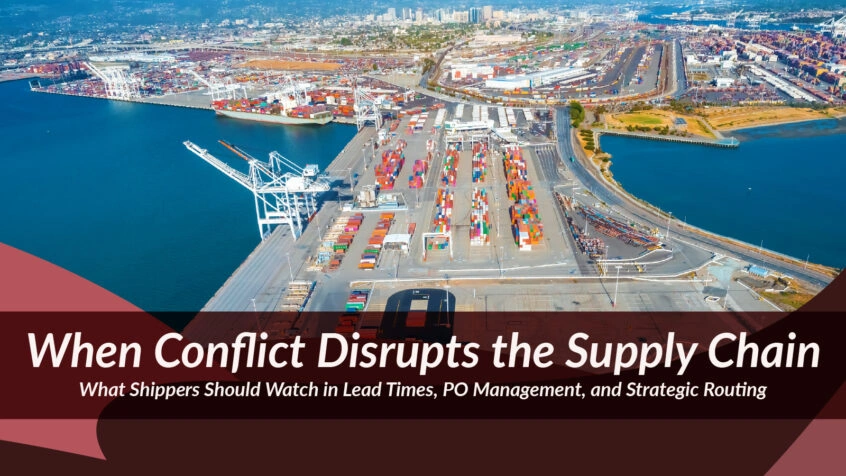
What Shippers Should Watch in Lead Times, PO Management, and Strategic Routing Geopolitical conflict is often discussed in terms of headlines, oil prices, or market reactions. For importers, exporters, and logistics teams, however, the real impact shows up somewhere more immediate: in lead times that stop behaving predictably, purchase orders that require constant reprioritization, and routing decisions that suddenly carry far greater operational and financial … Read More
CIT Order: Remove IEEPA Duties Before Liquidation (2026)

Court of International Trade: Unliquidated Entries Should Not Liquidate With IEEPA Duties (What Importers Should Do Now) On March 4, 2026, the U.S. Court of International Trade (CIT) issued an order instructing the government to finalize the processing of goods entering the United States without assessing IEEPA-based tariffs, following the Supreme Court’s finding that IEEPA does not authorize these tariffs. Practically, this applies to entries … Read More
Supreme Court Strikes Down IEEPA Tariffs (Feb 20, 2026)

On February 20, 2026, the U.S. Supreme Court issued a 6–3 ruling striking down the sweeping, IEEPA-based tariffs. In short: the Court found that IEEPA does not authorize tariffs/duties in the way these measures were implemented. The decision covered the broad “reciprocal” tariffs that applied across nearly every country. What happens next operationally is still developing, especially around how refunds (if any) will be handled … Read More
Hapag-Lloyd’s Proposed Acquisition of ZIM for $4.2 Billion

What it signals for shippers in 2026 Carrier consolidation can appear peripheral to day-to-day execution until it materializes in operationally consequential ways, a revised service string, a modified port rotation, changes in equipment availability, or a subtle shift in contract leverage. The announced transaction in which Hapag-Lloyd proposes to acquire ZIM for approximately $4.2 billion is therefore best evaluated less as an isolated corporate event … Read More